
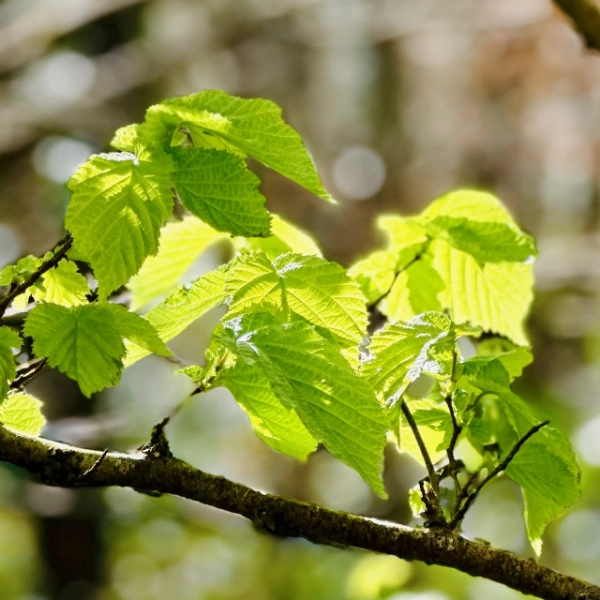
“Sunshine on spring leaves feels like pure joy - as if the world begins anew.”
BeWild Life
Dear Outsiders,
As we look forward to leaving the house without a coat, the Devon hedgerows are beginning their transformation. One by one, leaves start to push up between the brittle skeletons of last year’s foliage – pennywort, cranesbill, stitchwort, herb robert – until the old is overtaken by a wash of fresh green. The yellow brilliance of celandines reflects the spring sun; primroses gather in abundance. Ferns uncurl into exuberance. Suddenly the lanes are full of colour.
All around us, birdsong grows in intensity – and weaving through the bright chorus of robin, wren and dunnock comes now the two-note call of the first chiffchaffs, signalling their return from warmer climes. Soon they’ll be joined by the blackcap’s fluting, jewelled, louder-than-life song, as this tiny warbler too rejoins us. Busy and hidden, birds line their nests with gathered lichen and moss. Skylarks climb into widening skies.
Mornings grow louder. Evenings lengthen. It’s a time of firsts — first beetles, first buds, first blossom, first bumblebees — and the unmistakable feeling that the world is reopening - beginning again.
While the hedgerows gather momentum, so does BeWild.
We’ve just celebrated a vibrant Wild Week, shining a light on the extraordinary conservation work already happening in and around our community — from river restoration to species recovery. It was a chance to ask not only what these projects are doing for Dartmouth, but how we, as residents and businesses, can actively support them.
WildFinds continues to draw us closer to the natural world on our doorstep. Each month, alongside local artists and naturalists, we’ve explored shoreline treasures and woodland wonders, noticing the intricate details that are so easy to overlook. Learning together has deepened both knowledge and connection.
Now, BeWild Dartmouth is our focus - as we discover what’s already happening across the town, and begin to build from there. Which leads us to a bold question — could Dartmouth become the most biodiverse town in Britain?
Read on to find out more — and how you can be part of it.
Warm wishes,
Victoria, Kate & the team

WildWindows
A huge thank you to the businesses, artists and volunteers who extended Wild Week across the town…

BeWild At Work
Look out for our brand-new BeWild At Work map, highlighting the businesses that are now part of the growing BeWild community. You can pick up a copy from any participating business, as well as from the Dartmouth Visitor Centre. Whether you’re local or visiting, it’s a wonderful way to explore the town through a wilder lens.
Each BeWild business is also giving away WildCards — beautifully designed cards that share why they’ve chosen to support the natural world we live and work alongside. On the back, you’ll discover fascinating and sometimes surprising facts about the species or habitat they are championing.
Here are just a few of the new businesses who have recently joined the growing BeWild At Work community:
Andria – Celebrating traditional foraging, in particular wild mushrooms. Educating diners while inspiring local culinary biodiversity - even putting BeWild mushrooms on the menu!
Dartmouth Trading Company – Exploring the Painted Topshell, this business uncovers insights into marine life, illustrating the health and diversity of our local seas.
The Deli at Dartmouth – Advocating for the chocolate mining bee, a solitary spring pollinator crucial for flowers and crops, sweetly connecting people to nature.
Dudley’s Café – Supporting dolphins, Dudley’s raises awareness of these intelligent marine mammals, fostering community engagement.
Jack Speak – Championing octopuses, Jack Speak inspires fascination with these clever cephalopods, highlighting their ecological role and marine biodiversity.
Jenny Koo’s Kitchen – Focused on quince trees, Jenny Koo’s nurtures our connections to local edible landscapes, telling a story of place through local ingredients and abundance.
JP Baking – Spotlighting the cockchafer beetle, Julien promotes understanding of this once-common insect and its role in soil and farmland ecosystems.
Otok – Advocating for the marmalade hoverfly, Otok highlights this migratory pollinator and aphid predator, emphasizing its importance in sustaining garden biodiversity.
If you run a business and would like to be part of BeWild At Work in Dartmouth, we’d love to hear from you. Together, we’re building something inspiring — a town where biodiversity is woven into everyday life.
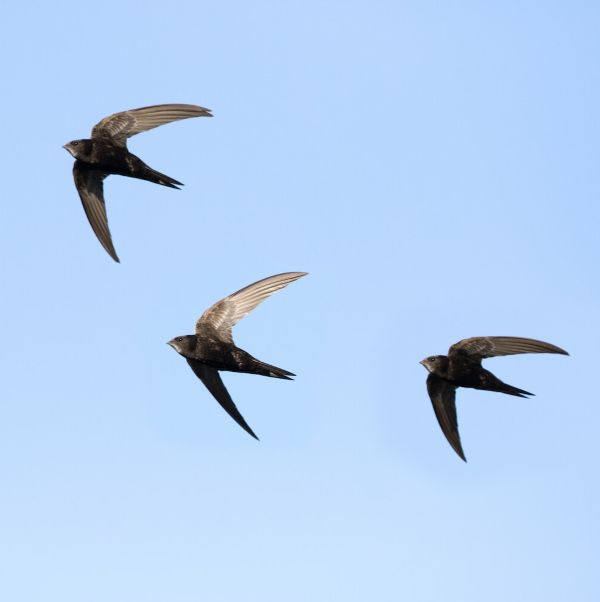
Flying High: How BBH Architects Are Making Space for Swifts
This spring we’re delighted to spotlight BBH Architects, whose involvement in BeWild At Work is rooted in practical action and thoughtful design.#
Working alongside the Devon Swift Project, BBH are supporting the installation of swift boxes in Dartmouth, helping to secure nesting spaces for these extraordinary migratory birds. Swifts return each May from Africa, faithful to the same eaves and rooftops — yet suitable nesting sites are rapidly disappearing from our built environment.
As architects, BBH are uniquely placed to influence how buildings can better accommodate wildlife. By advocating for integrated swift bricks and boxes in renovations and new developments, they are demonstrating how design can actively support biodiversity rather than displace it.
Their work also highlights a wider ecological truth: returning swifts need abundant insects to feed on. That means wilder verges, longer grass and native wildflowers across the town.
Through collaboration and leadership, BBH Architects are helping shape a Dartmouth where nature is considered - and included - by design.

Right Here, Right Now: What’s going on in the natural world on our doorstep
Spring is full of first appearances and fleeting marvels. Here are five things to look out for as the season gathers momentum:
Bee-flies - From March to May, these ginger, fluffy bee-mimics hover over flowers like tiny hummingbirds. Spot them feeding or sunbathing on leaves — their fascinating lifecycle relies on solitary bees.
Bumblebee Queens - Big, furry, and loud-buzzing, queens emerge from hibernation to find a spot for this year’s nest. Their low, zigzagging flight is one of spring’s first signs of insect life.
Cuckoos Passing Through - Listen for the unmistakable call. Cuckoos pause to rest and feed on their long journey north, a fleeting but thrilling sound of spring’s return to their breeding sites on Dartmoor.
Scarlet Elf Cups in the Leaf Litter - In damp woodland, look closely at fallen branches. Bright red, cup-shaped fungi glow against the brown leaf litter — tiny jewels hidden in plain sight.
First Overwintered Butterflies - Brimstones — sulphur-yellow and full of energy — are often the first butterflies on the wing, basking in sunshine before darting along newly greening hedgerows.
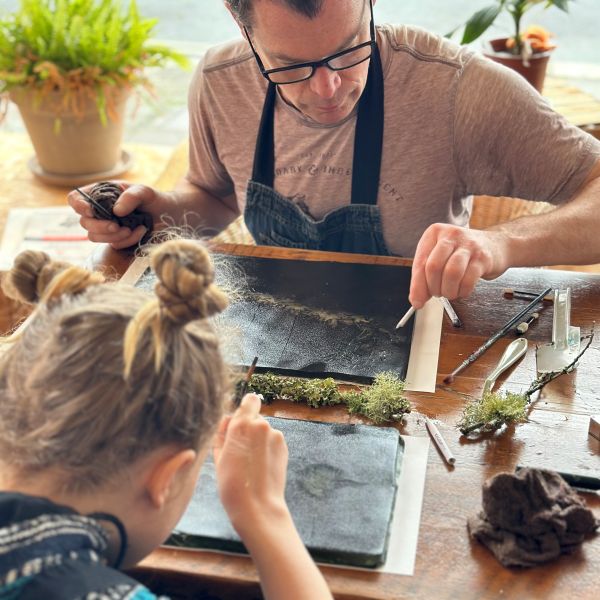
WildFinds continues…
WildFinds brings the community together to explore and celebrate the natural world!
Held at Coastal Trail on the first Sunday of every month at 10am, it’s for all ages—perfect for curious minds and nature lovers. Join us for hands-on activities, wildlife identification, and playful learning that sparks wonder and connection. Come along, meet fellow explorers, and discover the hidden wild right on your doorstep.

Habitat Highlight: a walk in the woods
Our woodlands are among our richest wildlife habitats, supporting thousands of species of plants, fungi, insects, birds, and mammals. In spring they come alive with birdsong — blackbirds, thrushes, finches, warblers. The older the woods, the more complex and valuable the ecosystems that have developed over time. They store carbon, help regulate water, and improve soil health. For us, their cultural value too is irreplaceably precious: they offer places for recreation, learning, and connection with nature, helping foster the care and understanding needed to protect our biodiversity.
And the trees themselves are quietly extraordinary. Each leaf is a tiny chemical factory, producing energy, repairing itself, and defending the tree from attack. When a caterpillar nibbles, a leaf can release compounds to make itself less palatable — or even send chemical warnings to other leaves and nearby trees. On an ancient oak, there may be around 800,000 leaves, remade anew each year. In spring, the unfurling of leaves isn’t just green growth — it’s the pulse of the woodland coming alive.
Sandquay Woods - ///selection.steep.overlaid

What are we reading?
Bird School by Adam Nicolson invites readers to slow down and truly notice the birds around us. This is not a conventional field guide; it blends keen observation with lyrical, poetic prose, making it accessible to anyone, whether novice or experienced.
Through Nicolson’s attentive eye, everyday scenes — a garden hedge, a woodland glade, a riverbank — become full of wonder. He captures the rhythms of bird life: the way they feed, call, fly, and interact, revealing subtle behaviours we often overlook. Interwoven poetry lifts the text, evoking the music, colour, and delicate drama of the natural world.
Bird School encourages curiosity and mindfulness, showing that even the birds we take for granted have remarkable stories to tell. It’s a book that inspires readers to look closer, listen more intently, and connect with the life that surrounds us every day.

What are we listening to?
Turning the Tide by Roots Media
If you’re looking for fresh, hopeful, and hands-on environmental storytelling, Turning the Tide is a podcast not to miss. Brought to you by Roots Media and hosted by teenager Lucas Brendon, this series takes listeners straight into the heart of Devon’s environmental action — from Dartmoor’s tors to Plymouth’s harbours.
In episode 4, Lucas interviews Victoria Benns, founder of BeWild CIC, exploring why reconnecting with nearby wildlife is a vital strategy for tackling biodiversity loss, supporting mental health, and strengthening communities. Victoria explains how small acts — noticing the birds, beetles, and moss on your doorstep — can spark real protection and activism. She also highlights the inspiring role of local businesses as biodiversity trailblazers, and why building hope is more effective than preaching doom.
What makes this podcast especially compelling is Lucas himself. As just a teenager, his curiosity, energy, and thoughtful questions bring the conversation alive. Turning the Tide is proof that young voices are shaping the future — and you’ll want to listen in.
Episodes available on Spotify, Amazon Music, and Apple Podcasts.

Join the Wild Side
Are you a natural trailblazer? Do you want to put wildlife back on the map, right here on your doorstep? From installing swift boxes to hosting wild events, championing a much-loved species, or simply sharing what you see, there are countless ways to make a difference.
Step in, speak up, and stand with us. Together we’re building a community where nature is noticed, nurtured, and celebrated - right here, right now.
Until next time - enjoy spring, and stay curious.
The BeWild Team x